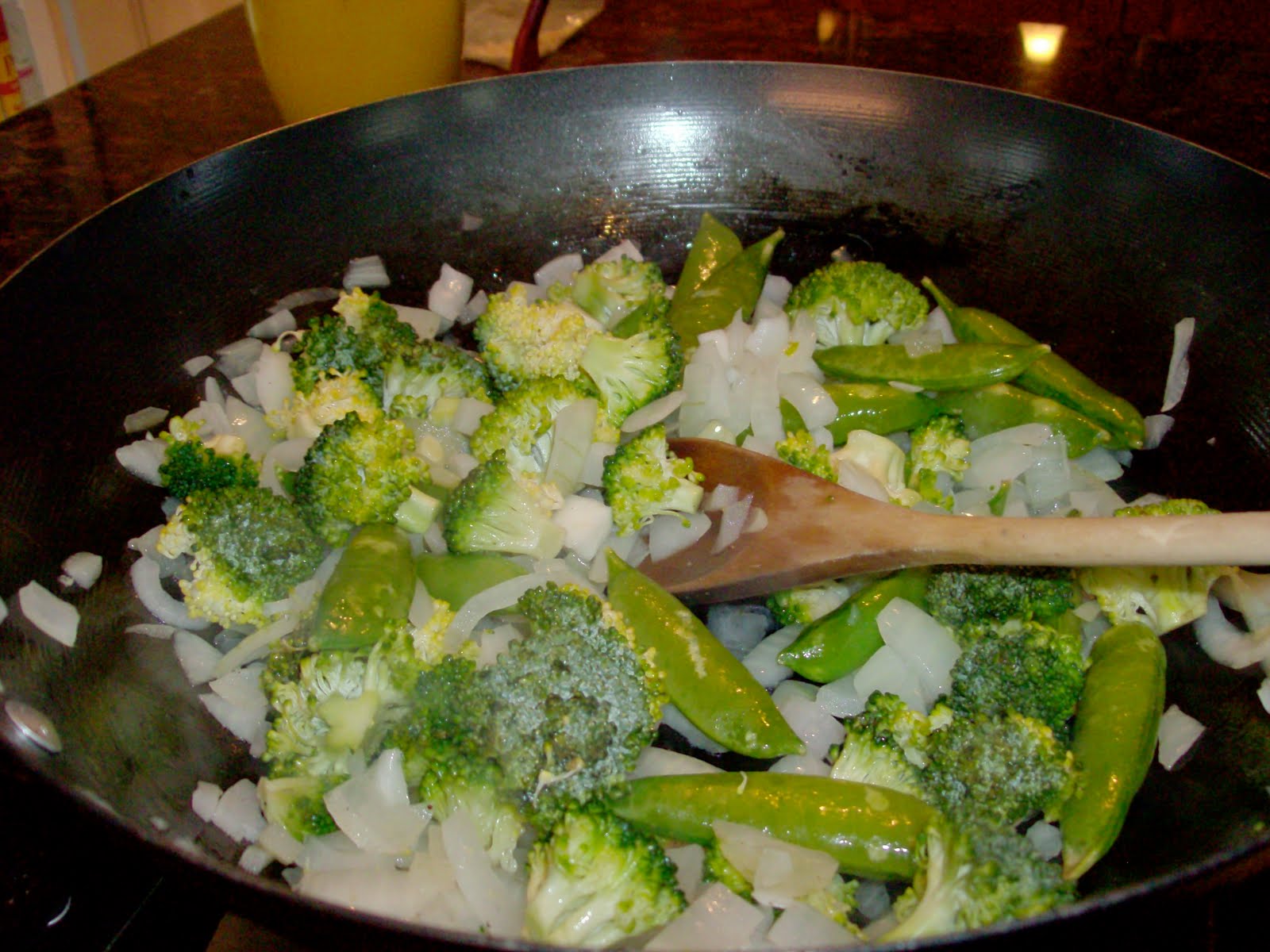
A lot of the things I cook take awhile, but this dish is healthy and quick and tasty, for the sevantless American cook. Like the trifle, it is particularly nice for farmer's market groceries, which are fresh and spring-y. I used an onion, carrots, broccoli, snap peas, bell peppers, zucchini and mushrooms. I also made garlic bread from scratch, which is less quick and easy, but you could buy a baguette and that is good too.
I started the garlic bread first, mixing 3 1/2 cups of bread flour with 3 tablespoons sugar, 1 tablespoon salt, 2 tablespoons shortening, and 4 1/2 teaspoons yeast. Add 2 1/4 cups very warm water and stir with a spatula. Continue adding the flour and stirring, 1 cup at a time, until the dough is easy to handle (up to 6 or 7 cups total). Spill it out of the bowl and knead it for about ten minutes until it is springy and nice.
Wash the bowl and put the dough back in. Cover it loosely with plastic wrap and let it sit for the length of one Dr. Who episode on instant Netflix (45 - 55 minutes). Grease two bread pans (I like using shortening and then a bit of flour) and punch the inflated dough. Tear it into two pieces, each of which you should roll into a 18" by 9" rectangle. I spread a few cloves of crushed garlic over the rectangle so it nice and flavorful. Roll the rectangle up and pinch it periodically so the air gets out and place it in one of the bread pans.

Let warm for the length of another Dr Who episode and then place the pans in an oven preheated to 425 and let cook for 25-30 minutes.
After I put the bread in to bake, I started the pasta boiling. We had some fun shapes and colors which definitely made everything prettier and more tasty. I cooked about 2 pounds to feed our house of 6 with some left over.

After about 12 minutes, I drained it and left the colander in the sink, covered with a large pot lid to keep most of the heat in.
As the pasta cooked, I chopped up all the veggies and started the broccoli, onion, and snap peas sautéing with a couple tablespoons of oil. I was pretty generous with the oil because I didn't use any other sauce on the pasta. Robbie had steamed some carrots the night before and I used the leftovers so they were already soft, but if yours are not, you should put them in with this first round of veggies. They sautéed for about 7 minutes.

Then I added the bell peppers, mushrooms, steamed carrots and zucchini with a bit more oil and let them sauté a few minutes more.

Finally, I melted about 1/4 cup of butter and mixed it with 3 cloves of crushed garlic for an extra garlic-y taste sensation. I sliced some of the freshly-baked bread (I have a bad habit of not letting it cool, it's too tempting) and laid out the buffet spread for my hungry roommates.

Gun, Germs, and Steel is a book by Jared Diamond about why European people were able to conquer and exterminate and enslave so many non-European people. The short answer is that they had guns, germs, and steel, but the longer answer explores why they had those things and many of the non-European people did not. It is fascinating and readable and extended over lots of interesting disciplines, sometimes discussing how wheat and bananas evolved and other times discussing how good hunters coming from Africa killed off all the large mammals on not-Africa. It's excellent and I, of course, recommend it highly, even for people (me) who aren't crazy about non-fiction. So check it out!